What should you pay most attention to when developing lifting gear on a very large scale? Most people think about the calculations and potential errors, but even though that part is often complex, it's far from the biggest challenge.
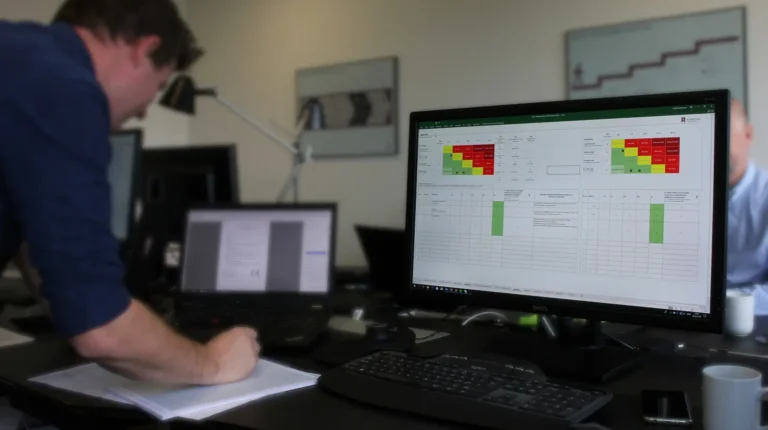
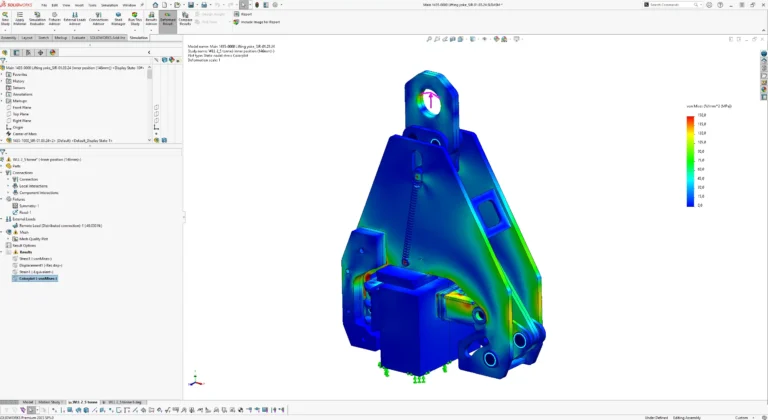
The calculation programs are now so good that problems rarely arise, either in the design and development of pneumatics, hydraulics, or electronics. There are also a wide range of standards and principles that minimise the risk of errors.
The greatest complexity lies entirely elsewhere, much further back in the development process. The number one mistake in the special development of lifting equipment already occurs in the concept phase.
It's not about whether it's hard to design a good concept for your promise equipment. It's more about ensuring that all links in the product's value chain function optimally, and that all stakeholders are satisfied with the solution.
Premature product development leads to mistakes
If the project manager is not asked the necessary questions of the right people, the whole foundation for success will be ruined.
The mistake often happens because the company is so keen to know the final production price that the concept process is sped up too much. Equally often, the pressure comes from something even more banal; namely, that it feels productive to start product development as quickly as possible.
The problem is simply that it is rarely appropriate.
What is a concept process, and why is it important?
Concept development is the very first phase when you need to develop custom lifting equipment. Here, the company gains an overview of which needs the product must solve and begins on the overall lines of the design.
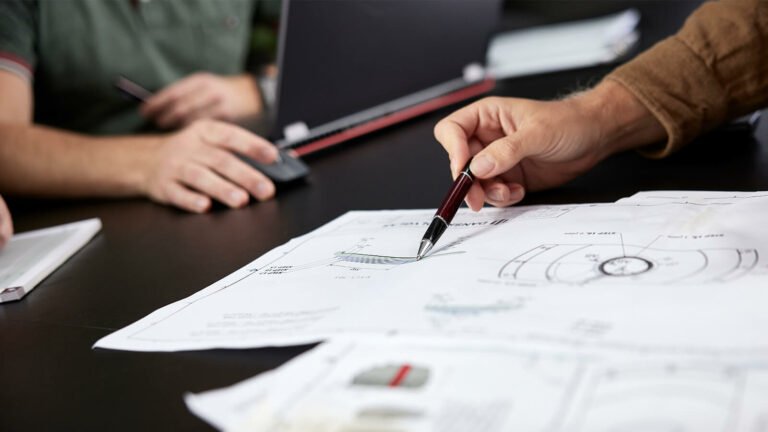
It can be tempting to consider various mechanical connections and components at this stage, but it's far better to save those kinds of details for later.
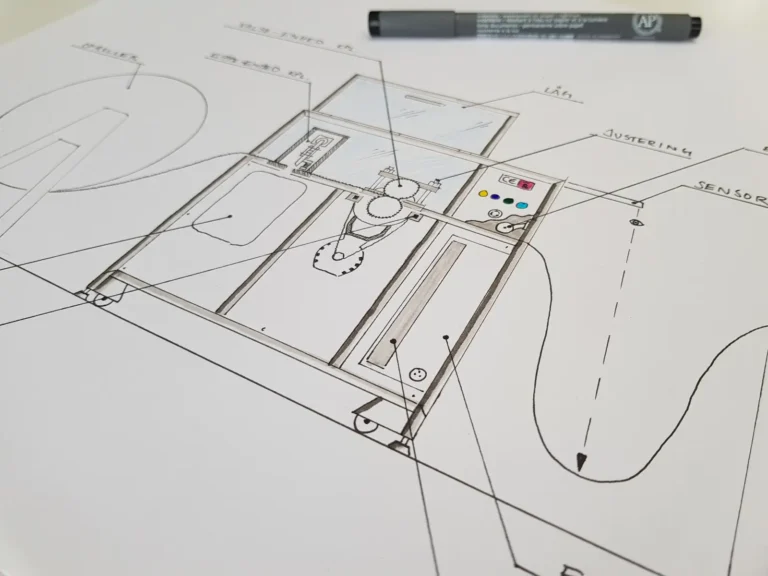
In fact, it can be a great advantage to stick to hand-drawn sketches in the concept phase and instead use the time to explore all the different use scenarios for the lifting equipment.
Many stakeholders bring many perspectives
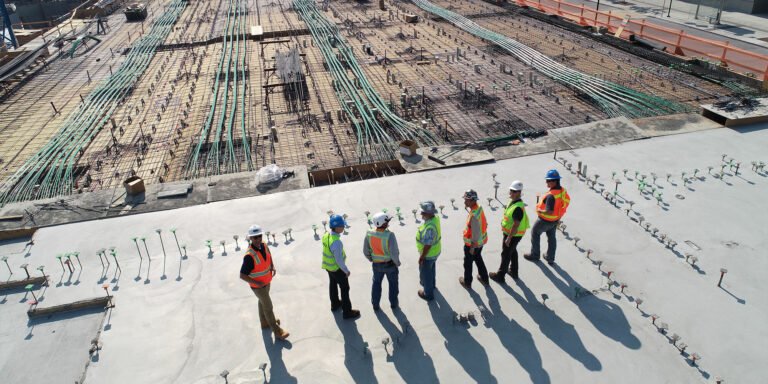
To gain the necessary understanding for the use of lifting equipment, ensure that all relevant individuals are involved in the initial phase. This way, you will incorporate as many perspectives as possible before finalising a concept.
It's not enough to talk to the administration and management; you also need to get hold of the people who will be working with the equipment in practice. You need to ask:
- The mechanic, how he works
- The operator, how they work
- The warehouse manager, how the gear can be stored
- The haulage contractor, how the equipment can be transported
- Site manager, what's the situation on site
- How the serviceman ensures the equipment has a long lifespan
If you rush through the concept process too quickly, you risk developing a lifting mechanism that is either impractical, cumbersome, or downright dangerous to store in its intended space.
Remember that the lifting equipment for a wind turbine blade, for example, is a bit of a monster in itself and therefore also counts its weight in tonnes.
Standard versus bespoke
If you need to lift a wind turbine tower into place, standard solutions are not an option; they simply do not exist.
However, because standard equipment typically costs a tenth or less than custom-designed lifting mechanisms, it can feel advantageous to purchase a standard item and then adapt it to match the specific need.
The solution is unfortunately far from optimal.
When customising your standard equipment, you must tests and CE marking, before it can be put into use. That process results in a number of heavy items in the budget, and therefore the achieved saving is quickly swallowed up.
If you cannot use standard equipment as it is, it usually makes most sense to develop something new from scratch. This way, the equipment will also fit your needs precisely and can more easily satisfy legal requirements, your company's formal requirements, and the requirements of the people who work with the lifting gear on a daily basis.