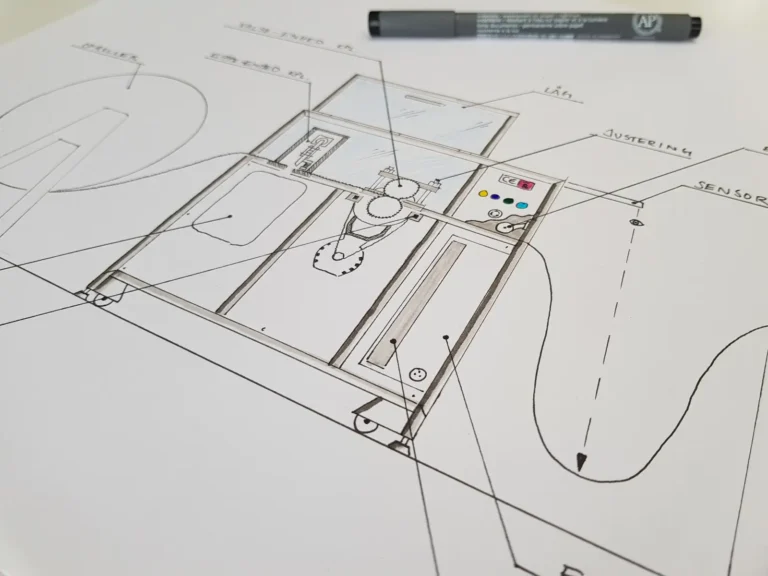
Gain insight into the typical errors encountered when we come across machinery in practice. This concerns both errors in the construction of your machine and matters that can lead to the CE marking being revoked from an already approved machine.
All machines sold within the EU must CE marking. But contrary to popular belief, the CE mark is not a guarantee that expresses the machine's quality or lifespan. It only indicates that the machine meets the safety requirements of the Machinery Directive and other relevant EN standards.
No special permission is required to issue a CE mark, but the EU requires that the person assigning the mark has training and the necessary competencies in, for example, electrical, pneumatic, electronic, and hydraulic systems in order to be able to risk assess the machine.
And that is precisely what a CE mark is: an assessment of the risks your machine poses to the operator and a series of corresponding requirements for how your machine must be constructed to minimise these risks.
It's relatively easy and quick to get a CE mark, especially if you're aware of the pitfalls. Here are the 7 mistakes we see most often.
One or more components do not meet the safety requirements
When your machine is assessed as needing to comply with certain safety requirements, it is important that all components meet the specified standard. You cannot cut corners; even the smallest components must be considered.
2. The shielding is insufficient
Depending on the risk level of your machine, ensure proper guarding for clamping and cutting mechanisms or similar. The guarding requirements are calculated based on the extent of damage the operator could sustain if something were to go wrong.
3. Your machine retains pressure after stopping
If pressure is not released from hydraulic and pneumatic systems, it can cause a crushing injury when the machine malfunctions. If your operator has their hands in the way – or if the machine is being cleaned or serviced – residual pressure can mean a lost hand or worse.
4. The emergency stop buttons do not work across machines.
If you have a machine line, it is a requirement that the entire line stops if any emergency stop button is pressed. Employees must therefore be able to stop all machines at the nearest button if they see a colleague in danger further down the line.
If there are dead areas in a production line, it is possible to zone the emergency stop so that it matches the areas that are visible.
5. Machines for internal use are not CE-marked
Although your machine is not intended for sale, it is still a good idea to CE-mark it. This protects both your employees and your company in the event of an accident.
6. Calculations regarding the machine's maximum load and durability are missing
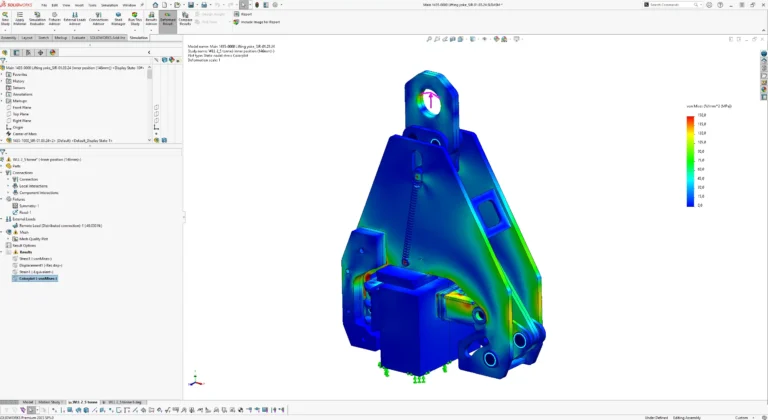
If you wish to CE mark a lift, for example, you must conduct documented tests to ensure the lift's maximum load capacity and any deflections. This is because you need to be certain that the lift can withstand lifting what it is intended to.
You must also specify what the lift may be used for.
7. You make changes to the machine after the CE mark has been awarded
A CE mark is applied to the individual machine and is only valid as long as the machine remains unchanged from the time of marking. Therefore, you must not add extra mechanisms or change how the machine functions without having a new CE mark produced with associated risk assessment and documentation.
Safety is a shared responsibility
As stated, the CE mark is not a guarantee scheme. It is an expression that a machine has the necessary safety measures to keep operators, repairers, and other persons safe.
However, the responsibility for the CE marking does not lie solely with the manufacturer. If you manufacture machinery, it is your responsibility that your machinery is CE marked, but if you are the purchaser of CE-marked machinery, it is actually also your responsibility to ensure that the machinery complies with the safety requirements that the manufacturer has built it according to, before you put it into use.
Compare it to buying a car: The car manufacturer is, of course, responsible for ensuring the car has front and rear lights, otherwise, it wouldn't be approved for driving on public roads. But it is you, the driver, who is responsible for ensuring the lights are working and are switched on before you roll out of the carport.
The same applies to CE-marked machinery. Ultimately, it is your responsibility to ensure your machinery is safe for your employees to use.
Therefore, always look for the CE mark and assess whether the mark has been issued correctly, so that your machines can be operated without the risk of losing a finger or an arm.